

What Happens to the Horses, the Tractor, and Thirty Years of Barn Contents?
Most articles about downsizing were written for people with a two-car garage and a storage closet.
They suggest sorting your belongings into keep, donate, and discard, and they include a cheerful paragraph about how liberating it feels.
Then you walk into a barn that has been accumulating since 1994.
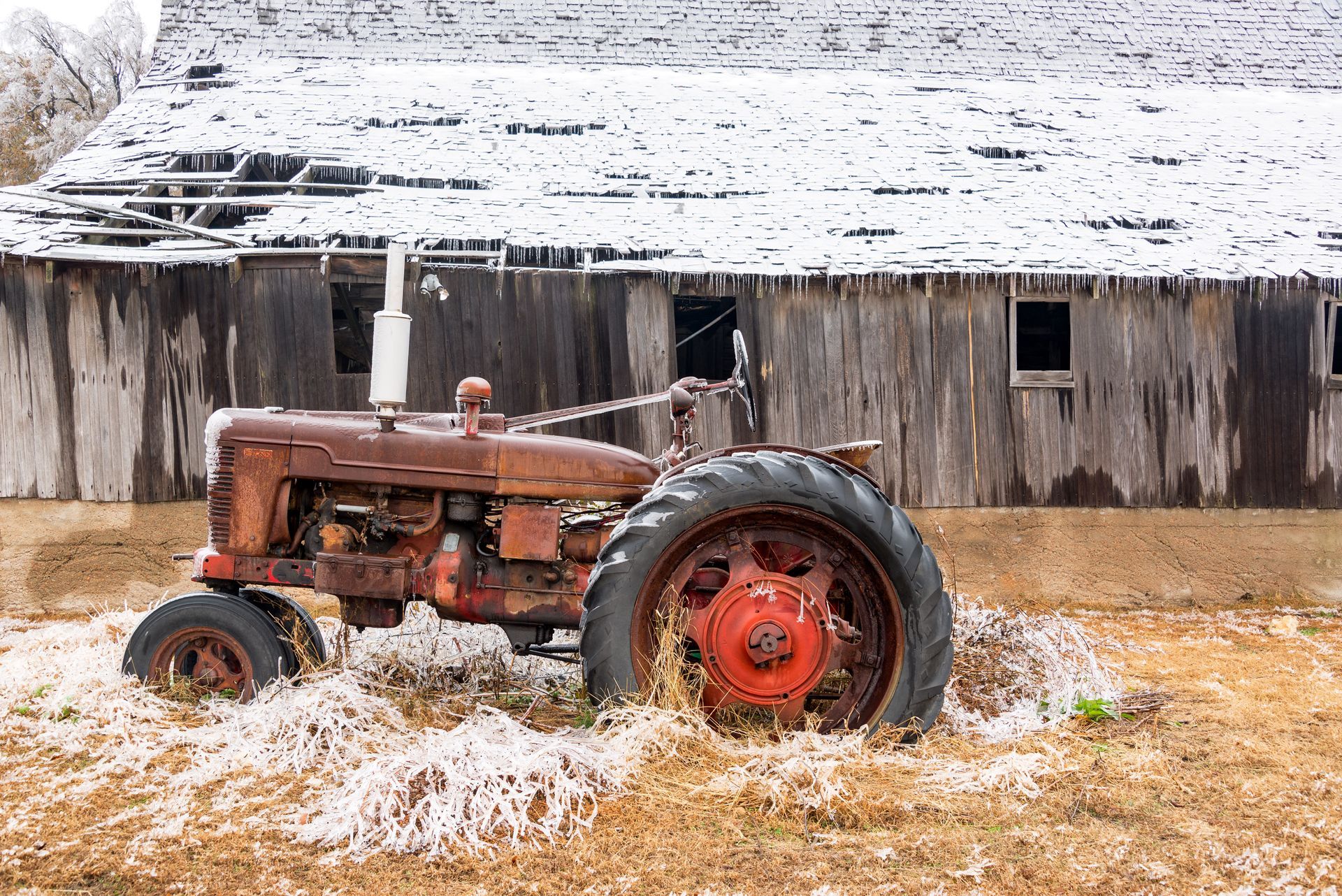
There is a tractor with a hydraulic leak, four saddles of varying usefulness, a chest freezer that may or may not run, roughly nine hundred feet of coiled fence wire, a stack of lumber that was going to become a run-in shed, twenty years of tack, a horse trailer with expired registration, and somewhere near the back wall, a chicken coop you built for birds who have long since departed.
Also there are the animals themselves, which no organizing article addresses at all.
This is the part of selling a country property that stops people. Not the house. Not the price. The contents.
If you are considering selling acreage in Auburn, Penryn, Newcastle, Loomis, Meadow Vista, Grass Valley, Nevada City, Colfax, Foresthill, or anywhere in the surrounding Sierra Foothills, here is a realistic sequence for working through it.
Start With the Animals, Because They Take the Longest
Every other category on this list can be handled in weeks. Placing animals well can take months, and it should.
Begin here even if you are a year out from listing.
Horses. Older horses, horses with maintenance needs, and horses without a job are the hardest to place responsibly, and rushing that process under selling pressure is how bad outcomes happen. Options worth exploring early include:
- Transferring the horse to a family member or longtime friend
- Selling through a trainer who knows the horse honestly
- Moving the horse to a boarding facility while you transition
- Placing with a reputable rescue or sanctuary, which usually involves waiting lists
- Retiring the horse at a dedicated retirement facility
- Taking the horse with you, if your next property supports it
The Auburn area has an unusually deep equestrian community, which genuinely helps. Trainers, farriers, veterinarians, and boarding operators here know each other and know who is looking. That network is worth using early, quietly, and honestly.
Please describe your horse accurately when placing him. A horse who cribs, or is hard to catch, or needs joint support, or does not load, deserves a home that knows that going in.
Livestock and small stock. Goats, sheep, and cattle usually have local markets, and 4-H families, small farms, and neighbors are often the right answer. Give yourself lead time.
Poultry and ducks. Easier to rehome, but not instant. Local feed stores, community boards, and 4-H groups are useful. Flocks tend to place better as flocks than as individuals.
Livestock guardian dogs. These are working animals with real requirements, and they do not typically thrive as suburban pets. If you are moving somewhere without stock to guard, start early with breed-specific rescues and working-dog networks. An LGD placed with someone who does not understand the breed rarely stays placed.
Barn cats. Genuinely worth planning for. Several rescues run working-cat placement programs specifically for barn cats who are not candidates for indoor homes.
Your household pets. Consider what your next living situation actually allows, particularly if you are moving to a rental, a gated community with pet restrictions, or in with family.
The reason animals come first is simple. A property showing with animals still on it is fine and often charming. A closing date arriving with animals still unplaced is a crisis. Give yourself the buffer.
Next, Separate Real Property From Personal Property
This distinction matters legally and it prevents arguments during escrow.
Generally speaking, items permanently affixed to the land or structures are real property and convey with the sale. Items that are not affixed are personal property and do not, unless the contract says otherwise.
The gray areas on rural property are numerous:
- Water troughs, particularly plumbed ones
- Automatic waterers
- Portable versus permanent shelters
- Panel corrals and portable round pens
- Chicken coops on skids
- Feeders and hay racks
- Solar equipment, owned or leased
- Generators, especially hardwired ones
- Propane tanks, owned or leased
- Pumps, filtration systems, and pressure tanks
- Irrigation lines, valves, and portable sprinklers
- Gates and gate openers
- Stall mats
- Shop equipment bolted to the floor
- Mounted tool chests and cabinets
- Fuel tanks
- Loading chutes and squeeze chutes
- Tractor implements
Decide early what stays and what goes, and make sure that decision appears in the listing and in the contract. Ambiguity here produces some of the most avoidable disputes in rural transactions, and they almost always surface at the final walkthrough when everyone is tired.
If a buyer wants your tractor and implements, that can often be arranged, but personal property should be handled separately from the real estate transaction rather than folded into it casually. Your agent and the escrow officer can explain how to structure it appropriately.
Then Handle the Equipment
Rural equipment has real value, and it also has real disposal cost if you get it wrong.
Things that usually sell well:
- Tractors in running condition, especially compact utility tractors
- Implements: box scrapers, mowers, harrows, augers, forks
- Utility vehicles and side-by-sides
- Horse trailers with current registration and sound floors
- Stock trailers
- Quality hand tools and shop equipment
- Welders, compressors, generators
- Panel corrals and portable stalls
- Water tanks and troughs
Where to sell:
- Local equipment consignment lots
- Farm and ranch auctions
- Regional online marketplaces, which work well for tractors and trailers
- Equine consignment shops for tack
- Word of mouth through your feed store, farrier, and trainer
- Estate sale companies that specifically handle ranch contents
That last point matters. Not every estate sale company knows what a harrow is worth. Ask specifically whether they handle agricultural and ranch property. A generalist company may price your equipment as scrap and price your grandmother's dishes as treasure, which is exactly backwards.
Things that cost money to remove:
- Non-running vehicles and equipment
- Old tires, which have specific disposal requirements
- Scrap metal piles, though some have salvage value
- Treated lumber
- Old fencing wire
- Dead appliances
- Accumulated construction debris
Budget for a dumpster or several. Placer County and Nevada County both have transfer stations and specific rules for tires, appliances, and certain materials. Check current requirements before loading a truck.
Deal With Hazardous Materials Properly
This category deserves its own section because it is the one people handle worst.
Country properties accumulate substances that cannot go in a dumpster:
- Waste oil, hydraulic fluid, and antifreeze
- Diesel and gasoline in storage containers
- Pesticides and herbicides
- Rodenticides
- Expired livestock medications and sharps
- Paint and solvents
- Old batteries, including tractor batteries
- Pool and spa chemicals
- Propane cylinders Fertilizer
Both Placer County and Nevada County operate household hazardous waste programs with specific drop-off procedures and limits. Check their current guidance, because rules and hours change and some materials require appointments.
Beyond the disposal requirement, there is a disclosure dimension. Visible chemical storage, stained soil, or an abandoned fuel tank raises legitimate buyer and lender questions. Handling it properly before listing is both easier and cheaper than explaining it during escrow.
Now the Household, Which Is the Emotional Part
Everything above is logistics. This part is not.
A longtime country home holds a different kind of accumulation. Furniture from a house you raised children in. Tools your father used. Ribbons from horses who are gone. Boxes you have not opened since a move three decades ago.
A few things that help:
Work in small, finite sessions. One closet. One cabinet. Two hours. Stopping while you still have energy is more productive than a marathon that ends in exhaustion and a decision to quit entirely.
Start where the emotion is lowest. The utility closet, the laundry room, the garage shelving. Momentum built on easy decisions carries into hard ones.
Photograph before you release. A photograph of the workbench, the tack room wall, the kitchen you cooked in for thirty years. People part with objects more easily once the memory is secured somewhere.
Let family claim early, with a deadline. Adult children frequently want items they have not mentioned, and equally frequently do not want items you assumed they would treasure. Ask directly, give a date, and hold to it.
Give yourself one box of undecided items. One. Not a room. Not a barn bay. The undecided pile has a documented tendency to expand overnight when unsupervised.
Consider asking for help. Senior move managers and professional organizers exist, some specializing in later-life transitions. If the physical work has become genuinely difficult, this is money well spent rather than an admission of anything.
My background as an occupational therapist shapes how I think about this. Transitions like this are not primarily logistical problems. The sorting is real work, but the harder work is deciding what a life's worth of belongings should become. Pacing it matters more than finishing it fast.
What Buyers Actually Need to See
Here is the useful news, and it lowers the bar considerably.
You do not need the property empty and spotless to sell it well. You need it legible .
Buyers evaluating rural property need to be able to:
- Walk the perimeter of the pasture
- Reach and enter the barn
- See the shape and grade of the land
- Locate the well head and septic access
- Walk through the shop
- Understand where fencing runs
- See the outbuildings clearly
- Move safely without climbing over equipment
A barn packed to the rafters does not read as "storage included." It reads as "unknown condition," and buyers discount for unknowns. Clearing the aisle and the perimeter of a barn often does more for a property's perceived value than a much more expensive cosmetic project inside the house.
Same with the land. If a buyer cannot see the pasture because of parked equipment and blackberry, they cannot value the pasture.
Clear enough to be understood. That is the standard, not perfection.
A Common Sierra Foothills Seller Story
Imagine a couple selling eight acres near Penryn after thirty-two years.
They had two aging Quarter Horses, a small flock of chickens, a barn full of accumulated equipment, a shop their late brother-in-law had used for cabinet work, and a house with contents from three generations.
They had been talking about selling for four years and had not started, because every conversation about the barn ended the conversation.
The sequence that finally worked was unglamorous. Animals first, beginning eight months out, with both horses eventually placed through their longtime farrier's network to homes they could visit. Equipment next, through a ranch-experienced estate sale company that spent a weekend on the shop alone. Hazardous materials to the county program. Then two dumpsters. Then the house, in two-hour sessions, over ten weeks.
They did not empty the property. Roughly a third of the barn still had things in it on listing day. But the aisle was clear, the pasture was visible, the shop could be walked through, and the well and septic access were marked.
Buyers understood what they were looking at, which was the entire objective.
Frequently Asked Questions
- How far in advance should I start dealing with animals and equipment?
For animals, six to twelve months is reasonable, particularly for older horses, livestock guardian dogs, or any animal with special needs. For equipment and contents, three to six months is usually workable depending on volume.
2. Can I leave equipment or belongings behind for the buyer?
Sometimes, and occasionally a buyer is glad to have it. But it needs to be agreed in writing rather than assumed. Items left behind without agreement can create problems at final walkthrough and delay closing.
3. Do I have to remove everything before listing?
No. The property needs to be safe, accessible, and understandable. Buyers of rural property do not expect an empty barn. They expect to be able to see what they are buying.
4. What do I do with an old fuel tank or chemicals?
Contact your county's household hazardous waste program for current procedures and limits. Abandoned fuel tanks in particular should be addressed before listing, because they raise buyer, lender, and insurance questions.
5. Should I sell my tractor or include it with the property?
That depends on its value, its condition, and your likely buyer. Some rural buyers value a well-maintained tractor highly. If it is included, it should be documented properly as personal property rather than assumed to convey.
Start Before You Feel Ready
The homeowners who postpone selling a country property rarely postpone because of the house. They postpone because of everything around it.
Broken into sequence, with animals first and legibility rather than perfection as the goal, it becomes a series of finite tasks rather than one impossible one.
If your foothill property has become more than you want to maintain, I can help you build a realistic timeline, connect you with ranch-experienced estate sale companies and haulers, and identify what actually needs to be handled before buyers arrive.
Ready to learn more? Contact me for a private, no-pressure property consultation.
About Lori McIntosh
Lori McIntosh is an Auburn, California REALTOR® with GUIDE Real Estate, specializing in country homes, luxury properties, acreage, equestrian properties, and downsizing throughout Auburn, Penryn, Newcastle, Loomis, Meadow Vista, Grass Valley, Nevada City, Colfax, Foresthill, and surrounding Sierra Foothills communities.
Lori lives on five acres with her own Arabians, a mini horse, livestock guardian dogs, and a rotating assortment of poultry, so she has direct experience with the equipment, animals, and daily realities of running a small ranch.
Her background as an occupational therapist specializing in geriatrics informs how she helps longtime homeowners pace and plan a major transition, and her previous career as a professional photographer shapes how she presents rural properties to the buyers most likely to value them.