

How do you negotiate a luxury home purchase in Auburn, CA?

Negotiating a luxury home in Auburn means working with thinner inventory, more complex due diligence, and buyers and sellers who are both well-informed. Success comes down to knowing the micro-market, reading the disclosures carefully, and structuring escrow terms that reflect the real leverage in the deal, not just the headline price.
I've negotiated high-end country homes, equestrian estates, and acreage parcels across Auburn, Meadow Vista, Newcastle, and the broader Placer County foothills for years. Here's what actually moves the needle at the luxury tier.
What "Luxury" Means in Auburn's 2026 Market
Before you can negotiate well, you have to understand where the luxury line sits. Recent data from CA Housing Market News, drawing on Redfin MLS figures, puts Auburn's overall median sale price at approximately $665,888 for the three months ending June 2026, up 3.8% year-over-year. The Q2 2026 quarterly report for Auburn and the surrounding foothills puts the median closed price at $675,000 across all home types.
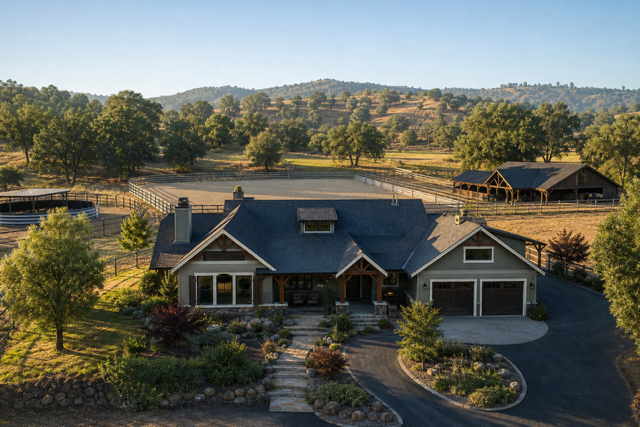
Luxury in Auburn sits well above that. Custom estates, gated communities, and acreage properties in areas like Darkhorse and Sierra View Estates routinely list above $1 million. That gap between the city-wide median and the luxury tier matters enormously for negotiation: you're operating in a different pool of buyers, a different set of comps, and a different emotional dynamic.
One data point worth watching: while headline prices have climbed, median price per square foot has actually declined, falling roughly 6.4% year-over-year through June 2026. That tells me buyers are paying more for size and amenities, not necessarily for efficiency of space. If you're buying a large estate, that's a negotiation angle worth exploring with your agent.
| Metric | Auburn Market (Mid-2026) | Source / Notes |
|---|---|---|
| Overall median sale price (3 months ending June 2026) | ~$665,888 | Redfin via CA Housing Market News; all home types |
| Q2 2026 median closed price | ~$675,000 | Q2 2026 Auburn foothills quarterly report; all types |
| Q2 2026 average closed price | ~$780,167 | Q2 2026 Auburn foothills quarterly report |
| Typical luxury entry point (Placer County estates) | $1M+ | Agent commentary on Darkhorse, Sierra View Estates |
| Median price per sq ft (3 months ending June 2026) | ~$335 (down 6.4% YoY) | Redfin via CA Housing Market News |
Your specific property's value depends on condition, lot size, usable acreage, views, water source, and micro-location. A one-acre parcel with canyon views in Darkhorse and a five-acre working horse property outside Auburn proper require completely different comp sets. That's where a local market analysis becomes essential, not optional.
The Real Negotiation Levers in an Auburn Luxury Deal
At the $1M+ tier, negotiation is rarely just about price. The most effective deals I've structured involve multiple levers working together: timing, contingencies, disclosures, and escrow terms. Here's how each one plays out in Auburn.''
Days on Market as a Compass
The Q2 2026 quarterly report notes that most closed homes in Auburn sold within the first 30 days, but market time varied considerably by price, condition, and ownership costs. Luxury properties behave differently from the median. Inventory is thinner, the buyer pool is smaller, and an overpriced or over-improved listing can sit for 60, 90, or more days.
When I'm representing a buyer on a property that's been sitting, that time on market is leverage. A seller who listed at $1.4 million six weeks ago and hasn't had a serious offer is in a different negotiating position than one who went under contract in a week. I always pull the full listing history before we write an offer.
For sellers: a well-priced, well-presented luxury listing in Auburn can still move quickly. Spring 2026 saw sellers reclaim the upper hand in the broader market. But luxury is its own micro-market, and pricing above what the comp set supports will cost you time, which costs you leverage.
Disclosures as a Negotiation Tool: TDS and SPQ
California law requires most residential sellers to deliver a Transfer Disclosure Statement, mandated under California Civil Code section 1102 et seq., disclosing known material facts and defects. This is not optional and it applies to Auburn luxury transactions just as it does to any 1-to-4 unit residential property in the state.
Alongside the TDS, most California transactions include a Seller Property Questionnaire, a standard form from the California Association of REALTORS® that digs deeper into improvements, disputes, nuisances, and property history. The SPQ is not legally mandated the way the TDS is, but it's standard practice in brokerage and it's where the real story often surfaces on a luxury property.
On acreage and estate properties in Auburn, I pay close attention to these disclosures for:
- Unpermitted improvements (guest houses, barns, grading, additions)
- Well and septic history, including service records and any failures
- Drainage, slope, or easement issues on hillside or canyon-adjacent parcels
- Neighbor disputes or noise nuisances which are especially material on semi-rural luxury lots
When disclosures surface a material issue, California law gives buyers a window to renegotiate or cancel. I've used this window to negotiate price adjustments and seller credits on behalf of buyers, and I've also helped sellers structure proactive, thorough disclosures that reduce the risk of post-acceptance surprises and strengthen their ability to hold firm on price. What you put in those forms, and when, is itself a strategic decision.
Escrow Structure and Contingency Timing
California is an escrow state. The California Department of Financial Protection and Innovation oversees licensed escrow holders, and in Auburn luxury transactions, a neutral escrow company coordinates deposits, title, loan documents, payoffs, and recording until all conditions are met.
The escrow structure itself is a negotiation. In a standard Auburn transaction, escrow might run 30 days. On a complex luxury deal involving a jumbo loan, a well and septic inspection, a slope-stability review, or a contingent sale, 45 to 60 days is often more realistic and actually protects both parties. I've seen rushed escrows on luxury properties create problems that cost more to resolve than the extra two weeks would have.
Key escrow-level negotiation points I work through on every luxury deal:
- Initial deposit amount and timing: typically delivered within a negotiated number of business days after acceptance
- Staged deposits: an initial deposit that increases after contingencies are removed, which can signal buyer commitment while protecting capital
- Inspection and due-diligence windows: large estates often need specialized inspections beyond a standard home inspection, and the timeline should reflect that
- Rent-back or early-occupancy arrangements: sellers of large estates sometimes need time to relocate; buyers may want contractor access before close; both are negotiable through escrow
- Credits and repair agreements: rather than asking a seller to make repairs on a luxury property, I often negotiate a credit through escrow so the buyer controls the work
The allocation of closing costs, including title insurance, escrow fees, and county charges, is also negotiable. Regional custom in Sacramento and Placer County tends toward certain conventions, but in luxury deals, leverage shifts those conventions. In a strong seller's market, buyers often accept standard allocations. On a property that's been sitting, a buyer may successfully negotiate seller-paid credits toward closing costs or a rate buydown. The CFPB's closing-cost overview is a useful primer if you're new to what these line items actually are. What you'll pay in your specific deal depends on how it's negotiated, and that's a conversation to have with me directly, not something to estimate from a blog post.
Property Taxes, Mello-Roos, and Carrying Costs in the Offer
Property taxes in Placer County are not negotiable between buyer and seller. The base rate is set by California's Proposition 13 at 1% of assessed value, with additional voter-approved rates layered on top. The official Placer County FY 2025-2026 property tax rates resolution shows area-specific totals, with certain Auburn Elementary School District areas at approximately 1.025% of assessed value. An informational guide pegs the average effective rate in Placer County around 1.7263% for 2025-2026 when bonds and special assessments are included, though rates vary significantly by tax-rate area.
At $1M+ assessed values, that difference matters. On top of the base tax, many Auburn-area luxury communities carry Mello-Roos Community Facilities District assessments and HOA dues. I walk every buyer I work with through the full carrying-cost picture before we finalize an offer, because a $1.3 million estate with a heavy CFD and HOA load has a very different monthly cost profile than one without.
What IS negotiable: closing credits that offset anticipated capital improvements on an older luxury property, or seller concessions that help a buyer manage upfront costs. Property tax proration at close is handled through escrow per the closing date, but how credits and concessions are structured can soften the effective cost of buying. According to NAR research, affordability remains a pressure point across California in 2026, and luxury buyers are not immune to rate sensitivity. Seller-paid rate buydowns have become a legitimate negotiation point in deals where sellers have flexibility.
Broker fees and commissions are fully negotiable and not set by law. There is no standard or customary rate. The listing fee is agreed in the seller's listing agreement, and any compensation a seller chooses to offer a buyer's agent is separately negotiable. If you want to understand what those numbers look like in your specific situation, that's a direct conversation, not a blog answer.
Every situation is different, and the only way to know what you can realistically negotiate in a specific Auburn luxury deal is to run the numbers with someone who knows this market. That's exactly what I do before my clients ever write an offer or respond to one.
You can read what past clients have said about working with me on Google and Zillow.
Frequently Asked Questions
What price point counts as "luxury" for homes in Auburn and the surrounding Placer County foothills?
In Auburn's 2026 market, the overall median sale price sits around $665,000 to $675,000 for all home types. Luxury generally starts around $1 million and up, particularly for custom estates, acreage properties, and homes in gated communities like Darkhorse and Sierra View Estates. Properties with equestrian facilities, canyon views, or multi-acre lots in desirable foothills locations often fall into this tier.
How is negotiating a $1M+ luxury home in Auburn different from buying a regular single-family house here?
The differences are significant. Luxury deals involve thinner inventory and smaller buyer pools, which means comps have to be hyper-local and the leverage dynamics can shift quickly. Due diligence is more complex, often requiring specialized inspections for wells, septic systems, slopes, and unpermitted structures. Escrow timelines are longer, deposits are larger, and the disclosure documents carry more weight. Every term in the contract is a negotiation, not a formality.
In Auburn's current market, are luxury sellers still in the driver's seat or do buyers have more negotiating power?
It depends on the property. The broader Auburn market saw sellers reclaim the upper hand in spring 2026, with the typical home selling quickly and prices rising year-over-year. But luxury is its own micro-market. A well-priced, turnkey estate in a sought-after community can still attract competitive interest. A property that's been sitting for 60-plus days, or one with disclosure issues, gives a prepared buyer real leverage to negotiate price, credits, or terms. Days on market is the first number I look at.
What contingencies are realistic to negotiate on an Auburn luxury home?
Inspection, appraisal, and loan contingencies are all standard in California residential purchase agreements and remain negotiable in luxury deals. On large estates, I often negotiate extended inspection windows to allow for specialized due diligence, including well and septic testing, slope or drainage assessments, and review of any unpermitted structures. In a competitive situation, buyers sometimes shorten or waive certain contingencies, but that carries real risk on a complex property. I walk my clients through the tradeoffs before we decide what to include.
What should I look for in the TDS and SPQ when buying a high-end home in Auburn?
On luxury and acreage properties in Auburn, I focus on unpermitted improvements (guest houses, barns, grading), well and septic history, drainage and easement issues, and any disclosed neighbor disputes or nuisances. These items can surface material negotiation points: if a disclosure reveals an unpermitted structure or a septic system that needs replacement, California law gives buyers a window to renegotiate or cancel. Sellers who provide thorough, proactive disclosures tend to hold more pricing power because they reduce uncertainty for buyers.
If you're preparing to buy or sell a luxury property in Auburn, the negotiation strategy matters as much as the asking price. Book a strategy call with me and we'll map out exactly where the leverage sits in your specific situation. If you're a seller wondering what your property is worth in today's market, request a free home valuation and I'll give you a grounded, honest number.
About Lori McIntosh
Lori McIntosh is a REALTOR® (DRE 02122219) with GUIDE Real Estate, specializing in luxury country homes and equestrian estates across Auburn, Meadow Vista, Newcastle, Rocklin, Lincoln, Penryn, and the Greater Sacramento region in Placer, Nevada, Sacramento, and El Dorado counties. With 30+ years of sales experience and a background as an Occupational Therapist and Pharmaceutical Sales Representative, she brings a calm, strategic approach to high-end transactions, with particular expertise helping 55+, senior, and downsizing clients navigate smooth, low-stress moves.
GUIDE Real Estate · (530)613-5644
Equal Housing Opportunity. Lori McIntosh, REALTOR® DRE 02122219, brokered by GUIDE Real Estate, licensed by the California Department of Real Estate. This article is general information only and does not constitute legal, tax, or financial advice. Confirm all figures, costs, and contract terms with your attorney, tax advisor, lender, or escrow officer.