

What makes Auburn, CA a luxury country living destination in 2026?
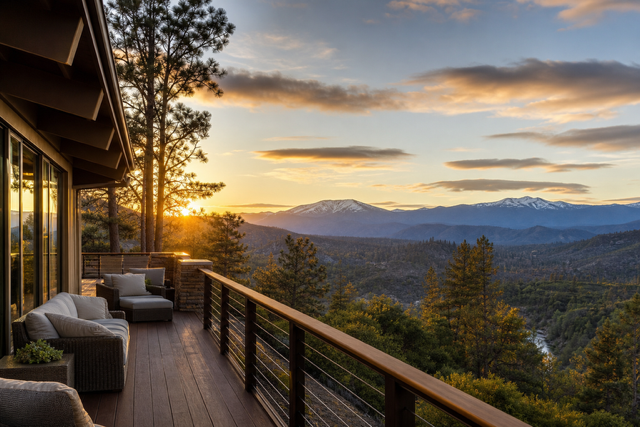
Auburn, CA sits in the Sierra Nevada foothills northeast of Sacramento and offers something the valley suburbs genuinely can't match: custom acreage estates, equestrian properties, canyon views, and a small-town historic character, all priced in the mid-$600K to $900K-plus range and within a realistic commute of downtown Sacramento. As of mid-2026, homes here are selling in roughly 14 days when priced well, making it a competitive but deliberate market for buyers who want more than a tract home.
Key Takeaways
- Auburn's median sale price reached $666,000 for the three months ending June 2026, according to Redfin, with well-priced homes selling in about 14 days on average.
- Placer County's median sale price was $698,000 through July 2026 per Redfin's county data, placing Auburn in line with, or slightly above, the broader county median.
- Auburn's luxury-country niche means custom construction, usable acreage, and equestrian or hobby-farm features, not HOA-governed new-build subdivisions.
- Under California's Proposition 13, your assessed value is set at purchase price, so a higher-end Auburn buy sets your property tax baseline from day one, budget accordingly.
- Overpriced or highly specialized rural listings can sit significantly longer, giving patient buyers real negotiating room on the right property.
What does "luxury country living" actually look like in Auburn?
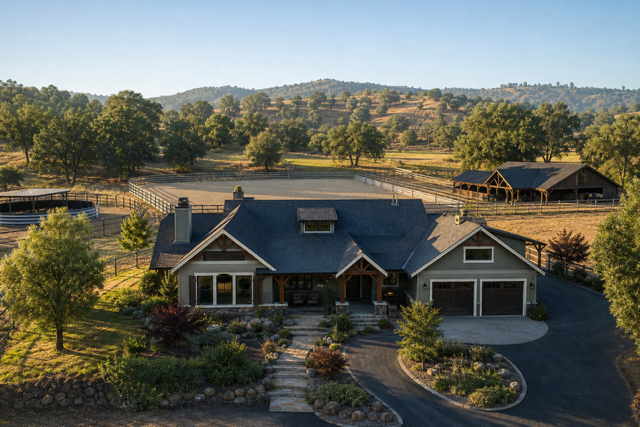
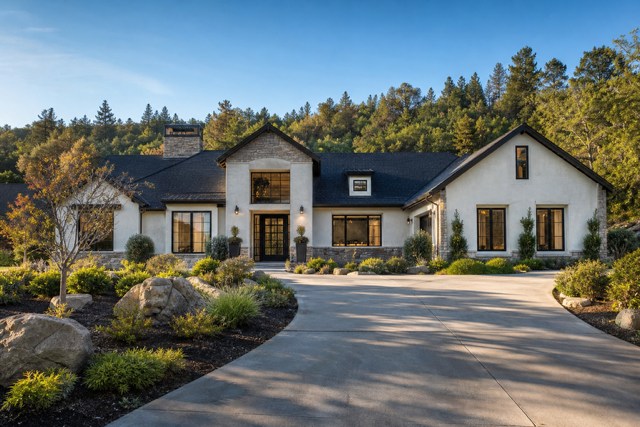
When buyers tell me they want luxury in Auburn, they rarely mean a gated subdivision with a clubhouse. What they mean, and what Auburn actually delivers, is something harder to find: a custom home on real land, with room to breathe, a view worth driving home to, and the kind of functional amenities that make rural life genuinely comfortable rather than rustic.
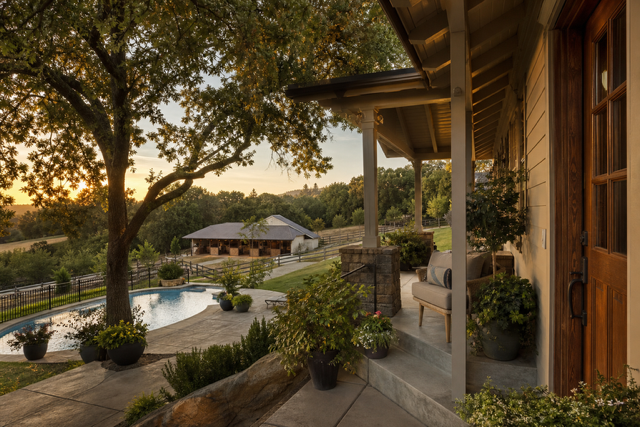
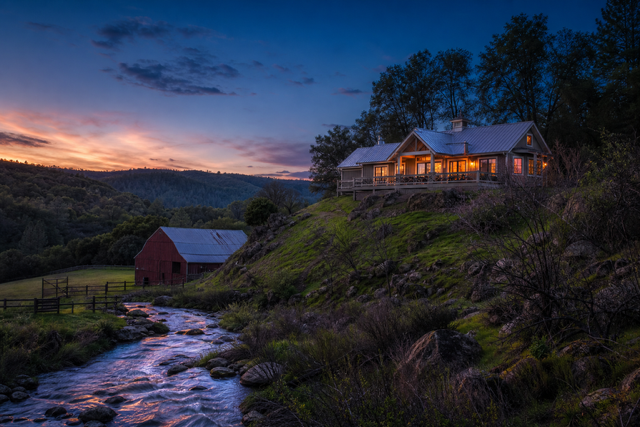
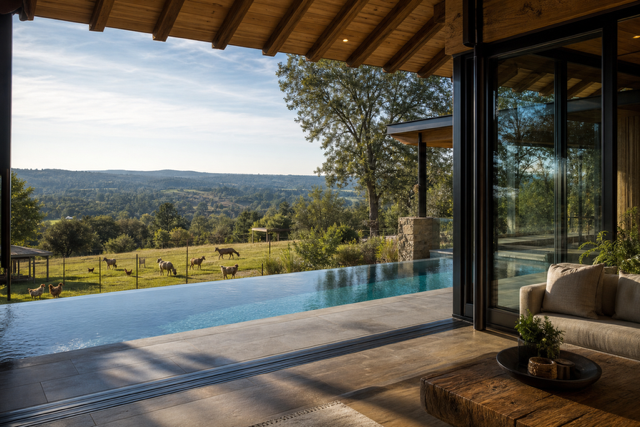
That means properties with multi-acre parcels, detached shops or barns, horse facilities, outdoor kitchens, wrap-around porches, and pools sized for actual entertaining. It means mature oak and pine landscaping you didn't plant yourself, and canyon or foothill views that shift with the seasons. It means a guest quarters over the barn or a studio separate from the main house, spaces that add real utility, not just square footage.
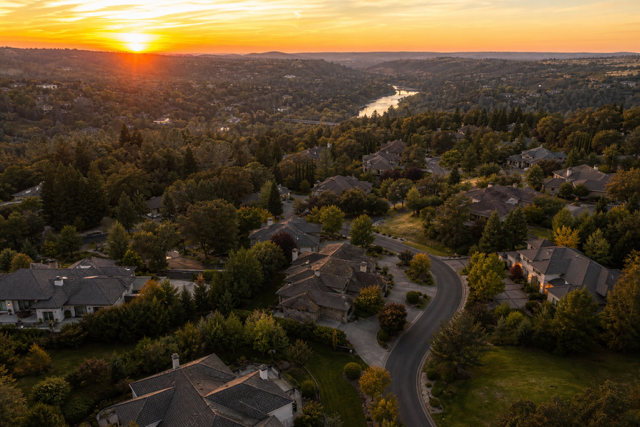
Auburn sits in the Sierra Nevada foothills at roughly 1,200 feet in elevation. Evenings cool down. The drive northeast from Sacramento takes you through rolling terrain that opens up into something genuinely different from the valley floor. That contrast, scenic, quieter, more spacious, is exactly what draws Sacramento professionals who've outgrown their Roseville or Folsom home and want the next chapter to feel like an upgrade in lifestyle, not just in square footage.
How does Auburn compare to other Placer County markets?
Auburn's pricing sits right in line with the broader county. Placer County's countywide median sale price was $688,059 in June 2026, with new listings coming to market at a median of $738,722. Auburn's own medians track closely with those figures, which tells you something important: buyers aren't paying a discount to live here.
What they're getting for that price is different, though. Rocklin and Lincoln offer newer construction, HOA amenities, and shorter commutes on flat terrain. Granite Bay has lakefront and estate pockets that push into genuinely high-end territory. Auburn occupies its own lane: historic character, foothill topography, more autonomy (fewer HOAs, more custom builds), and the kind of outdoor-recreation access, American River canyon trails, Gold Country history, proximity to Tahoe, that suburban communities can't replicate.
I work with buyers across all of these markets, and the ones who end up in Auburn are usually choosing it deliberately. They've seen Rocklin. They know what they're trading, a faster commute and a newer kitchen, for what Auburn gives back.
How competitive is the Auburn market for move-up buyers right now?
Competitive, but not frantic. That's the honest answer as of mid-2026, and the nuance matters for buyers in the $700K–$1M range.
Redfin characterizes Auburn's market as "very competitive," with homes selling in about 14 days on average over the three months ending June 2026. That's fast. A well-priced, turnkey country property, good condition, usable land, no deferred maintenance, will draw attention quickly, and decisive offers matter.
At the same time, not every listing moves that fast. Properties that are overpriced for their condition, or highly specialized in ways that narrow the buyer pool, can sit considerably longer. When roughly half of active listings have seen price reductions, that tells you the market rewards patience on the right property. This is exactly the kind of split I help my clients read before they make a move, knowing which listings are genuinely competitive versus which ones have been sitting for a reason.
Recent local market data puts Auburn's trailing figures in the high-$500Ks to mid-$600Ks depending on the time window, with one trailing 12-month analysis through late August 2026 citing a median sold price of $565,000. The spread between that figure and the mid-$600K medians from more recent quarters reflects the mix of properties closing, when more larger, higher-end homes transact in a given period, the median rises. For buyers targeting the upper end of Auburn's range, that dynamic works in your favor: you're buying into a segment that moves the needle.
What about the due-diligence process on a rural Auburn property?
This is where Auburn's country properties require more attention than a standard suburban transaction, and where working with someone who knows the territory genuinely matters.
Many of Auburn's higher-end rural properties involve private wells, septic systems, propane, outbuildings, and complex topography, seasonal creeks, oak woodlands, sloped parcels. Each of those elements adds a layer to the due-diligence process. Buyers typically order well flow and water quality tests, septic inspections, and sometimes fire-risk or defensible-space assessments as part of their contingencies. Outbuildings, barns, shops, guest houses, may require zoning and permitting checks to confirm legal use.
As the California Department of Real Estate's escrow guide explains, the escrow officer coordinates the flow of funds, documents, and conditions until all parties have satisfied their obligations and the deed records. On a complex rural property, that coordination role is more involved than on a tract home, more reports, more lender conditions, more moving parts. Escrow timelines on these properties can run longer even when demand is high, and that's normal. It's not a problem; it's the process working correctly.
I walk every one of my buyers through what to expect before we write an offer, so nothing in escrow comes as a surprise.
What should buyers know about property taxes on an Auburn luxury purchase?
California's property tax framework is straightforward in principle, even if the bill on a higher-end purchase is worth planning for. Under Proposition 13, your assessed value is generally set at your purchase price. The base property tax rate is approximately 1% of that assessed value, and it can increase by no more than 2% per year until a change of ownership or new construction triggers a reassessment.
Placer County administers local property tax bills and adds voter-approved local assessments on top of the base rate, so your effective rate will be slightly above 1% in most residential areas of the county. For a higher-value Auburn property, especially one with substantial land and improvements, that baseline matters. Budget for it before you close, not after.
The specific numbers depend entirely on your purchase price and the tax rate area your property falls in. That's a conversation worth having with your lender, your tax advisor, and your escrow officer before you finalize your offer. I'll make sure you know what questions to ask.
The broader picture from Placer County rental and value data reinforces what I see on the ground: demand here is lifestyle-driven, not investment-yield-driven. Buyers in Auburn are buying a place to live, not a spreadsheet. That shapes everything from how sellers price to how buyers compete.
If you want to read what past clients have said about working with me, I'd love for you to check my reviews on Google and Zillow.
Frequently Asked Questions
Is Auburn CA a good place to buy a luxury home if I want country living but still commute to Sacramento?
Yes, Auburn is one of the more practical foothill choices for Sacramento commuters who want genuine country living. It sits roughly 35 miles northeast of downtown Sacramento via I-80, which puts it within a manageable drive for professionals who don't need to be in the office daily. The tradeoff is real: you're gaining scenic terrain, cooler evenings, and more space, while accepting a longer commute than Roseville or Folsom. For buyers who've made that calculation and want the lifestyle, Auburn delivers it without requiring a fully rural compromise.
What price range counts as "luxury" in Auburn compared to Roseville or Granite Bay?
In Auburn, "luxury" generally starts above the mid-$600K median and moves into the $800K–$1M-plus range for custom acreage estates, equestrian properties, and homes with significant land and outbuildings. That's a different flavor of luxury than Granite Bay's lakefront estates or Roseville's newer gated communities, Auburn's high-end market is defined more by land, custom construction, and foothill character than by amenity packages or prestige addresses. Buyers who want space and authenticity over HOA amenities tend to find better value here.
How do property taxes work on a higher-end Auburn home under California's Prop 13 rules?
Under Proposition 13, your assessed value is set at your purchase price when you buy, and the base property tax rate is approximately 1% of that value. Placer County adds voter-approved local assessments, so your effective rate typically runs slightly above 1% in most residential areas. The assessed value can increase by no more than 2% per year until a change of ownership or new construction triggers a full reassessment. For a higher-value Auburn purchase with substantial land and improvements, that baseline can represent a meaningful annual obligation, confirm the specific tax rate area with your escrow officer and tax advisor before closing.
What kind of amenities do Auburn's country properties typically offer?
Auburn's luxury-country properties commonly feature multi-acre parcels, horse facilities (arenas, barns, pasture), detached shops or RV garages, guest quarters, pools, outdoor kitchens, and wrap-around porches built for three-season entertaining. Many sit in semi-rural pockets with views of the American River canyon or rolling oak-studded foothills, while staying close enough to Old Town Auburn's restaurants and community life to avoid true rural isolation. The emphasis is on functional, livable amenities rather than purely cosmetic upgrades.
How does escrow work when buying a country property in Auburn with wells, septic, or outbuildings?
The California escrow process uses a neutral third-party escrow officer to hold funds and coordinate documents until all conditions are satisfied and the deed records. On a rural Auburn property, that process typically involves additional inspections, well flow and water quality tests, septic inspections, and sometimes fire-risk assessments, along with zoning and permitting checks on outbuildings. These steps add complexity and can extend the escrow timeline compared to a straightforward suburban transaction, which is entirely normal for this type of property. Having an agent who's familiar with rural due diligence keeps those timelines from becoming surprises.
Auburn's combination of foothill scenery, custom acreage properties, and proximity to Sacramento makes it one of the most compelling luxury-country markets in the greater Sacramento region, and with homes moving in roughly 14 days when priced right, knowing exactly what to offer and when to move matters. I specialize in this market and can help you find the property that fits your lifestyle, negotiate the right terms, and navigate the rural due-diligence process from start to finish.
Book a strategy call with me to talk through what you're looking for, or get a free home valuation if you're considering selling your Auburn property.
About Lori McIntosh
Lori McIntosh is a REALTOR® (DRE 02122219) with GUIDE Real Estate, specializing in luxury country homes and equestrian estates across Auburn, Meadow Vista, Newcastle, Rocklin, Lincoln, Penryn, and the greater Sacramento region in Placer, Nevada, Sacramento, and El Dorado counties. With 30-plus years of sales experience and a background as an Occupational Therapist and Pharmaceutical Sales Representative, she brings particular expertise to high-end acreage properties and smooth, low-stress transitions for 55-plus clients, seniors, and downsizers.
GUIDE Real Estate · (530)613-5644
Equal Housing Opportunity. Lori McIntosh, REALTOR® DRE 02122219, brokered by GUIDE Real Estate. This article is general information only and does not constitute legal, tax, or financial advice. Confirm your specific costs, tax obligations, and transaction details with your escrow officer, tax advisor, or lender.