
The True Cost of Owning an Equestrian Property in the Sierra Nevada Foothills
There is a question buyers almost never ask me, and it is the one that matters most: "What will this property cost me after I own it?"
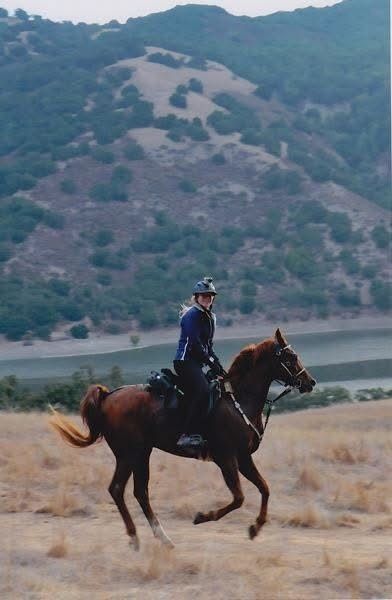
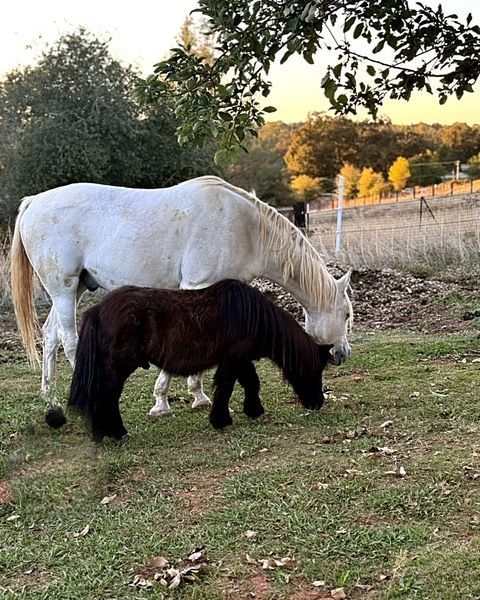
The purchase price is public. The carrying cost is not, and on equestrian property the gap between what buyers expect and what ownership actually runs can be wide. I keep three Arabians and a mini horse on five acres in Auburn, so what follows is not theory. It is my own checkbook, generalized into a guide.
If you are considering horse property in Placer or Nevada County, here is where the money actually goes, category by category, with honest ranges and the levers that move them.
The baseline: what boarding used to cost you
First, the good news, because there is plenty. If you currently board horses in or near the Bay Area, you know that full care board commonly runs several hundred to well over a thousand dollars per horse, per month, depending on the facility. For a multi-horse household, bringing them home to your own land is often the single strongest financial argument for the entire relocation. The land starts paying you back the day the trailer unloads.
Keep that number in mind as we go, because every cost below should be weighed against the boarding bill that disappears.
Feed: your biggest recurring line
Foothill pasture is seasonal. Even good irrigated ground carries horses for only part of the year, and dry annual grassland is green roughly December through May. Translation: you will feed hay most of the year, and hay is the largest recurring cost of horse keeping here.
Plan on a meaningful monthly hay budget per horse, varying with the horse's size, workload, and the year's hay prices, which move with fuel and drought conditions. Buying in bulk, having covered hay storage, and owning a truck that can haul a season's supply all bend this cost down. Properties with real hay storage, a barn bay or dedicated shed, save their owners money every single year, which is why I flag storage as a value feature when I show equestrian listings.
Add supplements, salt, and bedding if you stall, and feed becomes a four-figure annual conversation per horse. It is predictable, it is manageable, and it is far cheaper than board, but it belongs in your math.
Water and irrigation: the foothill wildcard
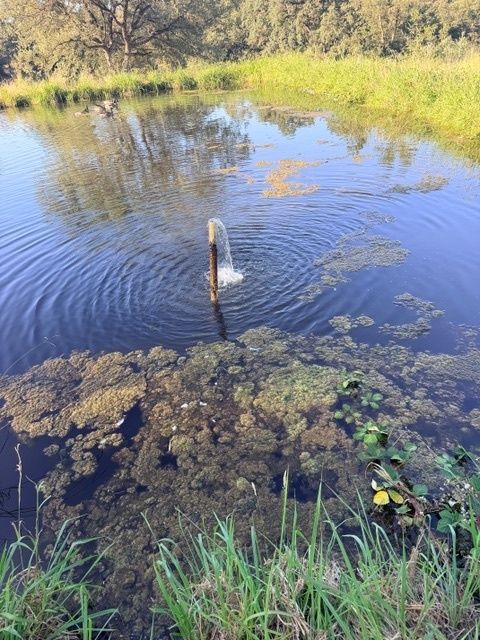
If your property enjoys irrigation district water, your seasonal water for pasture comes at an annual cost that is one of the great bargains of Gold Country living, and it keeps your land green and your grazing real. Confirm the allotment and the annual charge before you buy.
If you irrigate from a well, understand that pumping water costs electricity, and pasture irrigation in a foothill summer is not a rounding error on your power bill. If you do not irrigate at all, your land is beautiful golden dry range from June to November, and your hay budget carries the difference.
Infrastructure upkeep: the quiet compounding costs
Land and improvements age, and horses accelerate the process. The recurring categories:
Fencing. Horses test fences, trees drop limbs on them, and weather works on everything. Budget for ongoing repair and assume that any fence line will eventually want replacement. Materials matter: quality no-climb with top rail costs more upfront and dramatically less over time.
Footing and mud management. Winter in the foothills means managing mud in high-traffic areas. Rock, decomposed granite, and gravel around gates, shelters, and paddocks are recurring investments that protect both hooves and sanity.
Manure management. On acreage you can compost and spread, which costs time, or haul, which costs money. Either way it is a system you will run weekly forever.
Equipment. Rural life quietly acquires machinery: a tractor or utility vehicle, a mower or flail for defensible space, a harrow. Buy used and maintain well, but budget for it. Many buyers roll an equipment allowance into their purchase planning, which I think is wise.
Barn and shelter maintenance. Roofs, gutters, mats, lighting, and the eternal war with ground squirrels. Modest annually, real over a decade.
Insurance and fire readiness
Fire insurance on foothill property varies widely by fire zone, construction, and defensible space condition, and equestrian improvements like barns are part of the policy conversation. Get quotes during escrow so this number is known, not feared.
Then there is the annual cost of readiness itself: spring defensible space work, either your own weekends on a mower or a hired crew, and vegetation management on larger parcels. I consider this the true property tax of foothill living, paid in diligence.
The professionals: vet and farrier country math
Here is a pleasant surprise for Bay Area transplants: the equine professional ecosystem in Placer County is deep. This is horse country, home to a world-class concentration of veterinarians, farriers, trainers, and haulers, with UC Davis's renowned veterinary hospital under an hour away. Availability is excellent and pricing is generally kinder than Bay Area equivalents.
Routine costs still exist: farrier visits on a five-to-eight week cycle per horse, annual vaccinations and dental work, and the emergency fund every horse owner keeps because horses are gifted at finding trouble. None of this changes when you own land, but proximity to this professional network is a genuine, underpriced asset of the region.
Predator protection: the line item boarding never showed you
Here is a cost category that surprises nearly every transplant, and it belongs in your budget from day one. The Sierra Nevada foothills are mountain lion country. We also share the land with coyotes and the occasional black bear. That wildlife is part of what makes this place feel wild and beautiful, and it also means your animals need protection, because lions have been known to take livestock here, and a young, strong horse is not excluded from that risk. Mini horses, donkeys, goats, and sheep are especially easy targets. I keep a mini myself, and I would never recommend keeping one, or many, without real protection in place.
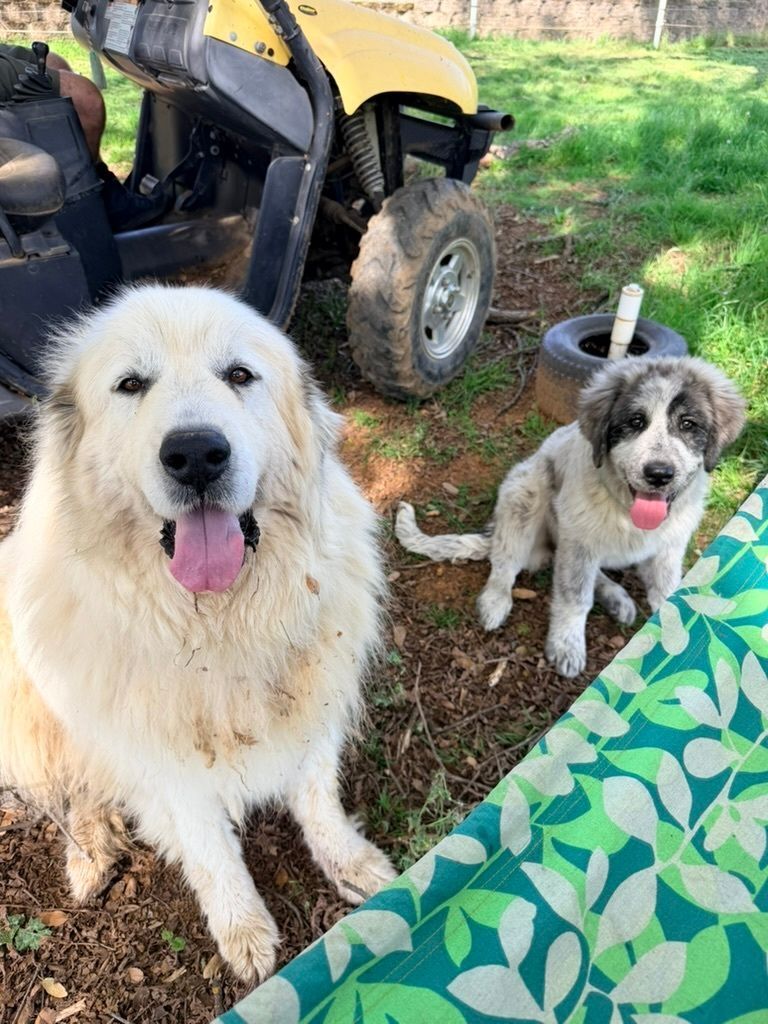
On my ranch, that protection is livestock guardian dogs. LGDs are working animals, not pets in the usual sense. Mine live outside 24 hours a day with plenty of cover and shelter, and they patrol and protect around the clock. Yes, they bark at night. That is the job. In rural neighborhoods like mine, neighbors understand and even appreciate it, because a working LGD protects every animal within earshot, not just its own. It is one of those country customs that makes sense the moment you live it.
Budget-wise, guardian dogs are their own small operation: quality food in real quantity, since these are large, hardworking breeds, plus water, shelter and cover, routine vet care, and vaccinations. Plan for it the way you plan for the horses themselves. Alternatives and supplements exist, including guardian donkeys or llamas for small stock, secure night paddocks close to the house, and good perimeter fencing, but for a multi-species foothill setup, a well-raised LGD team is the gold standard, and mine have more than earned their kibble.
The offsets: what the land gives back
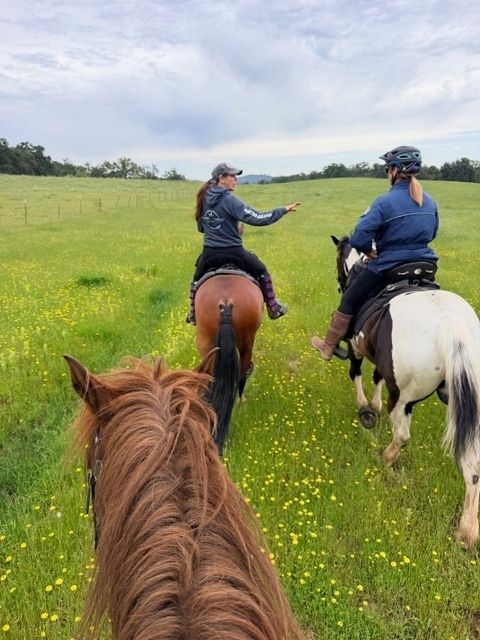
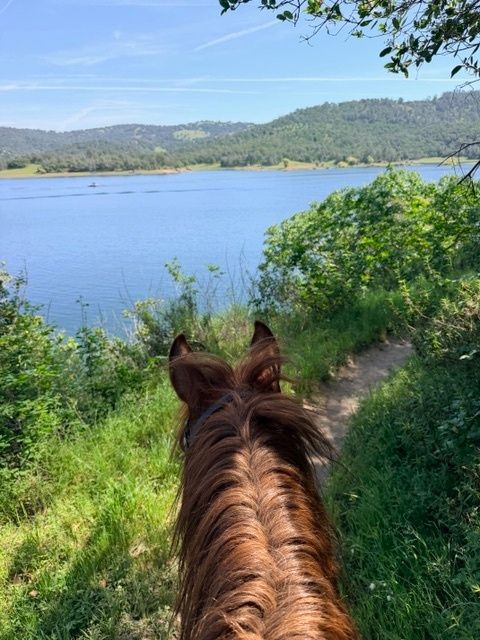
Now stack the other side of the ledger. Board eliminated, per horse, per month. Trailering reduced or eliminated if you have trail access, and in the Auburn area, with the Western States Trail and Auburn State Recreation Area at hand, many properties let you ride out your own gate. Hay bought in bulk instead of marked up by a facility. And the unquantifiable line: your horses on your land, visible from your kitchen window, on your schedule.
For most multi-horse households relocating from board, the annual operating cost of a well-set-up foothill property runs meaningfully below what they were paying to board, while their quality of life, and their horses', climbs.
The honest bottom line
A realistic annual operating picture for a small private equestrian setup here, feed, water, upkeep, insurance delta, and professionals, lands in the low five figures for a multi-horse household, with wide variance by property and horse count. The purchase decision should include that number from day one.
This is exactly the analysis I build with equestrian buyers: not just what the property costs to buy, but what this specific parcel, with its specific water, storage, fencing, and fire zone, will cost to run. Two listings at identical prices can differ by thousands per year in carrying cost, and knowing which is which before you offer is where a specialist earns her keep.
If you want that analysis on a property you are watching, or you want to talk through whether bringing your horses home pencils out, reach out. I will bring real numbers, my own included.
Lori McIntosh is a luxury country and equestrian property specialist with GUIDE Real Estate | Forbes Global Properties in Auburn, CA. DRE #02122219.